Table 0.1. Stamps of some former French colonies issued before the 1950s
The Evolution and Relevance of Exoticism
Historically sparked by colonial-era stamps, distant travels, and tales of adventure, exoticism continues to activate our imagination and influence our actions today through new media, art, and multinational brand names like Amazon and Alibaba. The author draws on the work of Victor Segalen, broadening his concept of "Aesthetics of the Diverse" adding the ethics dimension to it, and trying to establish the relevance of exoticism in the 21st century. Far from being an obsolete concept, understanding exoticism is highly relevant today; it can offer insights into consumer behavior and help address modern identity issues involving diversity, emigration, and "wokism".
Objectives of the Book
- Understand the history and nature of exoticism, primarily using a semiotic approach.
- Analyze how brands utilize exoticism and its effects on consumer behavior.
- Assess its societal relevance in the 2020s to help mitigate contemporary identity problems and its link to diversity.
- Update Segalen’s framework, stripping exoticism of its colonial and orientalist baggage to redefine it for the 21st century as "the ethics and aesthetics of the Diverse".
Structure of the Book
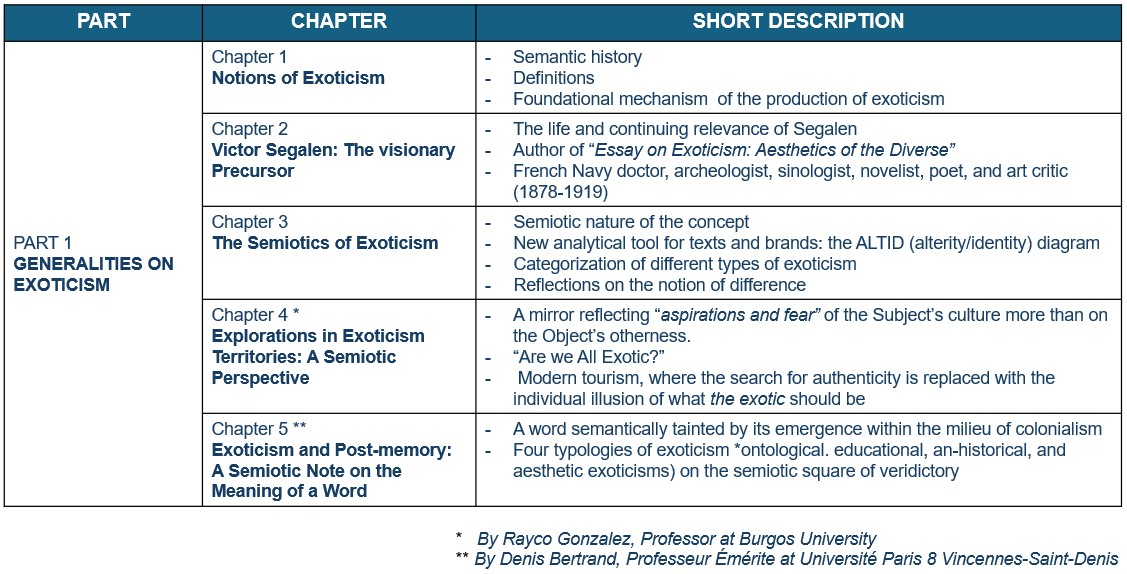
The book consists of twelve autonomous chapters divided into three distinct parts. It explores the nature and genesis of the concept, how exoticism applies to strategic and operational applications in brand marketing, and its intersection with modern societal issues like diversity and identity. By utilizing semiotic analysis, the book examines how the attraction to Otherness influences consumer behavior and shapes our understanding of fictional worlds. Ultimately, the work argues that while the term may seem dated, the fundamental human fascination with alterity remains a vital force in our globalized era.
Detailed content